Local & international investors · Republic of Argentina

Lawyer for Investors in Argentina

A portal specialized in the law applicable to investment in Argentina: equities, bonds, cryptocurrencies, derivatives and futures, corporate notes, mutual funds, corporate structuring, foreign-exchange and tax regime, rural and urban real estate, intellectual property, specific industrial sectors —mining, energy, hydrocarbons, RIGI— and Immigration: residency and citizenship by investment (RBI / CBI).

Portal Director: Aníbal Falivene · CPACF Vol. 71 Folio 132 · Active since 2000
9+
Integrated areas of applicable law
+25
Years of practice in Argentine law
4
Contact languages — ES · EN · PT · 中文
48h
Response to the confidential consultation
Who we advise

A portal focused on the investor.

We do not operate as a mass financial-consumer defense channel. We focus on clients with significant wealth, investment projects of a certain scale and a willingness to invest in a coordinated, comprehensive legal strategy.

Family offices
Single and multi-family offices with disputes over custody, investment mandates or trusts.
HNW/UHNW investors
Individuals with significant portfolios and disputes against advisors, private banks or platforms.
Managers
Asset managers, advisors and fund managers (SGFCI) in disputes with custodians, brokers, beneficiaries or regulators.
Holdings & vehicles
Local investment companies and offshore vehicles with assets in Argentine capital markets.
Trusts & structures
Financial trusts and foreign trusts with beneficiaries in Argentina and succession disputes over assets.
Retail investor or financial-consumer matter? This site isn't the right door. For smaller claims, financial-consumer defense and victims of mass fraud, we suggest reaching us through the general portals at falivene.com.ar and attorney.com.ar, where we route those cases to teams and fees appropriate to their scale.
Capital markets · Financial litigation

Disputes with intermediaries, asset recovery and corporate governance.

Complementing the international-investment areas, the portal also coordinates a dedicated capital-markets litigation practice: disputes with ALyC brokers, fund managers, custodians, issuers and fiduciaries. Four service lines focused on protecting the investor who already has capital deployed.

01 — Capital Markets Litigation

Disputes with ALyCs, mutual funds and custodians

Claims against ALyC agents, mutual-fund managers (SGFCI) and custodians for breach of discretionary mandate, churning, front-running, unsuitable recommendations, defective execution and undisclosed conflicts of interest.

  • Administrative claims before the CNV and BCRA
  • Mandatory mediation and institutional arbitration
  • Civil and commercial damages actions
  • Forensic audit of the brokerage account
02 — Cross-border Recovery

Asset tracing and international recovery

Identification, freezing and enforcement against the defendant's assets in Argentina and foreign jurisdictions (US, UK, ES, AT, CH, KY, BVI, PA, UY). We coordinate with local correspondents in each venue.

  • Forensic asset investigation
  • Interim measures and freezing orders
  • Recognition and enforcement of foreign judgments
  • Recovery from crypto exchanges and wallets
03 — Investment Funds & Trusts

Disputes over funds, financial trusts and foreign trusts

Representation of investors and beneficiaries in disputes with fund managers, depositaries, fiduciaries and trustees. Review of management rules, offering documents and compliance with fiduciary duties.

  • LP–GP disputes in private equity and VC
  • Disputes over financial and collateral trusts
  • Foreign trusts with Argentine beneficiaries
  • Succession disputes over financial assets
04 — Corporate Governance

Corporate governance and shareholder rights

Strategic advice and representation at shareholder meetings, challenges to resolutions, appraisal/withdrawal rights, disputes among partners and litigation arising from shareholders' agreements, tag-along, drag-along and anti-dilution clauses.

  • Review of meeting agendas and financial statements
  • Judicial challenges to shareholder meetings
  • Exercise of appraisal/withdrawal rights
  • Disputes among partners and shareholders' agreements
Capital markets instruments

Financial assets where we concentrate our litigation experience.

Within the portal's capital-markets branch, we work across the main instruments of the Argentine and international markets, integrating CNV, BCRA and ARCA regulation and the rules specific to each investment asset.

A
Equities

Equity

Local equities (MERVAL), CEDEARs, private equity, M&A disputes and conflicts in listed and closely held companies.

CEDEARMERVALM&APE
B
Bonds

Fixed income

Sovereign and sub-sovereign bonds, corporate notes, corporate debt, defaults, restructurings and collective bondholder proceedings.

SovereignNotesDefaultsRestructuring
Cryptocurrencies

Crypto

Disputes with exchanges, VASPs, crypto-asset custodians, DeFi smart contracts and international recovery of compromised wallets.

PSAVDeFiStablecoinsRecovery
F
Investment Funds

Funds & mandates

Mutual funds, closed-end funds, SME funds, financial trusts, and portfolios managed by private banks and ALyC brokers.

FundsALyCSGFCIMandate
How we work

A professional engagement, four stages.

Every case follows a standardized, traceable process. From the outset the client knows the scope of the work, the stages, the expected timelines and the structure of fixed and success fees.

— 01 CONSULTATION

Confidential & conflict check

Initial meeting under confidentiality. Verification of the absence of conflicts of interest and of the economic viability of the case. If we accept the engagement, we sign an engagement letter with agreed scope and fees.

— 02 FORENSIC

Technical-legal audit

Chronological reconstruction, quantification of damages, identification of contractual and regulatory breaches, and an internal report supporting the strategy. Coordination with experts where appropriate.

— 03 STRATEGY

Action-plan analysis

Design of a comprehensive strategy: regulatory (CNV/BCRA), out-of-court, mediation, institutional arbitration, civil-commercial litigation, corporate action or, where warranted, criminal complaint. The route is chosen by probability of success and time.

— 04 EXECUTION

Execution and recovery

Litigation, settlement negotiation, obtaining interim measures, enforcement of judgments or awards and, when needed, international asset tracing with correspondents. Regular reporting to the client on milestones and costs.

Types of dispute we litigate

What distinguishes a litigable case from a general inquiry.

Not every investment that loses value gives rise to a litigable case. What distinguishes a dispute with litigation potential is a documented breach of contractual or regulatory obligations by a third party. Below are the typical disputes in which we act.

Disputes with intermediaries, advisors and investment managers

  • Breach of the discretionary mandate or deviation from the agreed investment policy.
  • Unauthorized transactions and excessive trading frequency (churning).
  • Undisclosed conflicts of interest: placement of in-house products, retrocessions, hidden commissions.
  • Unsuitable recommendations: products inconsistent with the declared risk profile.
  • Defective execution; best execution and best price not observed.
  • Failure or undue delay in transferring, withdrawing or releasing funds.
  • Deficient corporate reporting, unaudited financials, opacity in NAV.

Disputes with investment funds, corporate structures and trusts

  • Disputes between partners or unit-holders and FCI/fund managers.
  • Breach of shareholders' agreements, tag-along, drag-along and pre-emptive rights.
  • Shareholder-meeting resolutions harmful to qualified minority shareholders.
  • Succession disputes over portfolios and equity holdings.
  • Disputes with fiduciaries and trustees over poor management or conflicts of interest.
  • Defaults and restructurings affecting private institutional holders.
  • Litigation arising from M&A deals, earn-outs, price adjustments and misrepresentations.
Frequently asked questions

What's worth knowing before the first consultation.

Who is legally responsible for the portal's services?

Dr. Aníbal Falivene is the portal's director and the coordinating attorney for the services provided through this site. His professional license (CPACF Vol. 71 Folio 132, active since 2000) can be independently verified in the CPACF Attorney Directory. Professional responsibility, attorney-client privilege and the principal dialogue with the client remain with him throughout the operation.

Why a portal and not a traditional law firm?

Because international investment is rarely resolved within a single branch of law. A typical transaction combines foreign-exchange, tax, corporate, registry, sector-specific and immigration law. The portal format lets us present these areas in an integrated way with a single point of coordination, instead of forcing the investor to hire several disconnected firms.

What is the minimum ticket for the projects you take?

We take projects from a minimum ticket of USD 10,000 in the value of the investment to be structured or the amount in dispute, assessed case by case according to technical complexity, jurisdictions involved and a reasonable probability of closing. For projects below that threshold we refer to the general portals at falivene.com.ar and attorney.com.ar.

How are fees structured?

A combined model: a fixed retainer per stage (consultation, structuring, execution of the transaction, compliance) plus a contingency fee on amounts actually recovered in litigation matters, under the terms of Law 27,423. The scheme is agreed in writing in the engagement letter before work begins. We do not take cases on a pure contingency basis.

Do you handle projects under the RIGI (Large Investment Incentive Regime)?

Yes. We advise on structuring Single Project Vehicles (VPU) to access the RIGI under Law 27,742, in the sectors covered by the regime: mining, hydrocarbons, energy, infrastructure, LNG, midstream and others. We coordinate tax, foreign-exchange and corporate planning to secure eligibility and the stability of the benefits for 30 years.

Can you coordinate immigration for the investor and their family?

Yes. The portal coordinates temporary and permanent residency, national ID (DNI), technical and professional visas, employer registration with RENURE and, where applicable, citizenship by investment under Decree 524/2025. We work in Spanish, English, Portuguese and Mandarin Chinese to ease the process for the overseas client and their family.

Can you represent me if I live abroad or my portfolio is offshore?

Yes. We regularly work with clients whose residence or corporate structures are in the US and China, as well as anywhere else in the world. We operate with Hague-apostilled powers of attorney, digital signatures where accepted and video-conference meetings. Cross-border cases are a core part of our practice.

Do you receive commissions from banks, brokers, platforms or third parties?

No, never. The fees agreed with the client are our only source of income. Independence is structural and lets us advise and litigate against any intermediary without conflicts.

Confidentiality?

Strict, governed by attorney-client privilege (Law 23,187) and by NDAs when the client requires them. The initial meeting is confidential even if the engagement does not proceed.

Portal Director

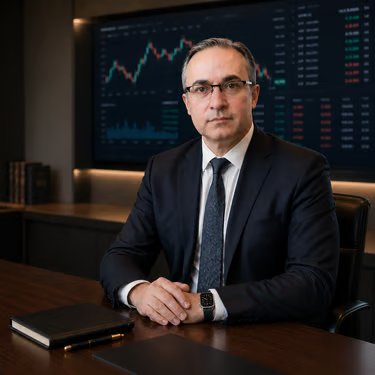
Aníbal Falivene: Legal Director of the services of abogadodeinversores.com.

Aníbal Falivene
Aníbal Falivene
Legal Director · CPACF Vol. 71 F.132

Aníbal Falivene is the portal's legal director and the attorney in charge of coordinating services. Admitted to the Buenos Aires City Bar Association (CPACF) since 2000, he has over 25 years of experience in Argentine public and private law, with a practice focused on defending local and foreign investors, capital markets law and international asset recovery.

His role within the portal is to be the single point of contact and legal coordinator of the investor's project: he translates commercial objectives into a comprehensive legal strategy, allocates the work across the areas each transaction requires —foreign-exchange, corporate, tax, registry, sector-specific, immigration— and maintains the principal dialogue with the overseas client throughout the operation.

His profile combines classical legal training with more than two decades of hands-on experience as an investor in local and international markets. That dual perspective —financial and legal— lets him translate a complex wealth problem into an actionable legal and procedural strategy, avoiding generic claims that would hardly stand up in court.

The portal's practice operates in Spanish, English, Portuguese and Mandarin Chinese, with mirror sites dedicated to each language community and senior collaborators across legal specialties when the operation requires it.

Verifiable professional license
Name
Aníbal Falivene
Bar
Buenos Aires City Bar Association (CPACF)
Registration
Vol. 71 · Folio 132
Admitted
Year 2000
Status
Active
Role in the portal
Legal Director · Coordinating Attorney
— 01

Foreign direct investment

Design and structuring of foreign capital's entry into Argentina: corporate vehicle, registration of the overseas investor, inflow of funds through the MLC, tax planning and application of the RIGI where appropriate.

— 02

Productive sectors

Legal practice specialized in mining, energy, hydrocarbons, real estate, intellectual property and capital markets. Integration with the large-investment incentive regime (RIGI) and bilateral treaties.

— 03

Investor immigration

Residencies for investors, technicians, executives and professionals. Coordination with the citizenship-by-investment regime (CBI) under Decree 524/2025 and tax-residency planning.

International investment in Argentina

Nine integrated areas, one single legal coordination.

Foreign investment in Argentina is rarely resolved within a single branch of law. Every transaction combines foreign-exchange, tax, corporate, registry, sector-specific and immigration matters. The portal coordinates the areas the international investor needs simultaneously, keeping the project from stalling between firms and specialties.

— Foreign investment regime

Legal framework for the foreign investor

Law 21,382 and the bilateral investment promotion and protection treaties grant the overseas investor the same rights as the local investor. Access to economic activity does not, as a rule, require prior government approval, except in regulated sectors or under antitrust rules. There are specific restrictions on rural land (Law 26,737), security and border zones, and broadcast media.

  • Initial structuring of the foreign investor's entry
  • Analysis of sector restrictions and antitrust thresholds
  • Application of bilateral treaties (BITs) and MIGA / OPIC cover
  • Registration of the overseas investor under art. 123 LGS
— Foreign-exchange regime · BCRA

Exchange controls and capital inflows

Argentina's foreign-exchange regime is one of the critical points for any international investment. Transfers to and from abroad are channeled through the Free Exchange Market (MLC) and are subject to BCRA communications, which are updated frequently. The deregulation process begun in 2024 is ongoing, but planning fund inflows, dividend payments, external borrowing and securities transactions requires constant regulatory monitoring.

  • Inflow of investment capital through the MLC
  • Repatriation of dividends, interest and capital
  • Financial borrowing from non-residents and prepayments
  • Securities transactions (MEP / CCL) and parking-period compliance
— Investment vehicles

Companies, branches and joint ventures

The foreign investor may operate in Argentina through a commercial representative, a branch, a local subsidiary (SA, SAU, SAS or SRL) or the acquisition of a stake in an existing company. Each vehicle has its own implications for corporate governance, liability, registration with the Public Registry of Commerce or IGJ, minimum capital, annual reporting and the applicability of the RIGI when the project is structured as a Single Project Vehicle (VPU).

  • Incorporation of SA, SAU, SAS and SRL · branches under art. 118 LGS
  • Structuring VPUs to access the RIGI (Law 27,742)
  • Joint ventures, UTEs, trusts and associative contracts
  • Mergers, spin-offs and corporate reorganizations
— Corporate tax

Project tax planning

Income tax reaches Argentine-source income earned by local companies, branches and foreign beneficiaries, with progressive rates at the corporate level and withholding on dividends. Transfer pricing, VAT, the tax on bank credits and debits, provincial turnover tax and stamp tax also apply. The network of double-taxation treaties covers more than 20 countries; there is no treaty in force with the United States, which calls for specific planning.

  • Analysis of income taxation, withholdings and applicable tax treaties
  • Transfer-pricing structure for intra-group transactions
  • VAT optimization on imports of goods and services
  • Wealth-tax regime on equity holdings and personal assets
— Intellectual property

Trademarks, patents and technology transfer

Trademarks are obtained by registration with the INPI, valid for ten renewable years. Patents and utility models are governed by Law 24,481 and granted for twenty years from the filing date. Argentina is party to the Paris Convention and the TRIPS Agreement, though not to the PCT. Licensing and technology-transfer agreements between a resident and a non-resident, for consideration, are governed by Law 22,426 and require registration to access preferential withholding rates.

  • Registration and defense of trademarks, patents, models and software
  • Licensing and technology-transfer agreements (Law 22,426)
  • Geographical indications and designations of origin
  • Infringement, opposition and nullity litigation
— Real estate

Real estate transactions and property rights

Property rights are governed by the numerus clausus principle of the Civil and Commercial Code: ownership, co-ownership, condominium, surface rights, usufruct, easements, mortgage, pledge, antichresis and indigenous community property. Acquisition requires sufficient title, a public deed before a notary and registration. There are specific restrictions on rural land and border zones. We recommend a thorough title search before any transaction.

  • Title search and real-estate due diligence
  • Urban and rural purchase-sale · commercial leases
  • Structuring at-cost and collateral real-estate trusts
  • Mortgages, surface rights and condominium developments
— Investor immigration

Residencies, visas and citizenship

Any foreign national seeking to reside and work in Argentina must obtain a residency, permit or consular visa from the National Directorate of Migration. There are three categories: transitory, temporary and permanent. Companies hiring foreign staff must register with RENURE. Mercosur nationals access a simplified regime, and bilateral agreements provide visa exemptions. Citizenship by investment operates under Decree 524/2025.

  • Temporary and permanent residency · national ID for foreigners
  • Work, technical and professional visas · Mercosur regime
  • Employer registration with RENURE
  • Citizenship by investment (CBI · Decree 524/2025)
— Mining

Concessions, exploration and mining development

Mining is governed by the Mining Code (Law 1,919), which assigns original ownership of deposits to the provinces or the federal State depending on their location. Individuals and companies gain access through a legal concession that distinguishes between an exploration permit and an exploitation concession, with mines classified into three categories. The concession is a property right that is transferable, mortgageable and registrable. Lithium and nuclear minerals have specific regulation.

  • Obtaining exploration permits and exploitation concessions
  • Transfer, mortgage and due diligence of mining concessions
  • Environmental and community-relations compliance
  • Application of the RIGI to mining projects · lithium and critical minerals
— Energy · Oil & Gas

Generation, transmission and hydrocarbons

The electricity sector is governed by Law 24,065 and divided into generation, transmission, distribution and demand, with a Wholesale Electricity Market coordinated by CAMMESA and overseen by the ENRE. Decree 450/2025 began a normalization period opening free contracting between generators and large users. Hydrocarbons are governed by Law 17,319 as amended by the Ley de Bases 27,742, which liberalizes prices, imports and exports and brings Vaca Muerta into the RIGI.

  • Renewable PPAs under MATER · distributed-generation projects
  • Hydrocarbon exploration permits and exploitation concessions
  • Pipeline transport concessions and public utilities
  • Application of the RIGI to energy, LNG and midstream projects
On the coordination of services. The portal works as the single point of legal coordination for the investor's project. When a transaction requires additional specialization —for example in provincial tax, environmental, antitrust, customs or labor matters— it is coordinated with a team of senior professionals with whom Dr. Falivene manages the client's overall legal strategy, retaining responsibility and sole dialogue with the investor.
Direct channels

Confidential consultation.

Contact us directly through whichever app you prefer. All information is treated confidentially, even if the engagement does not proceed. First-assessment response within approximately 48 business hours.

Reserved channels. The direct channels are reserved for active portal clients, professionals referring cases and previously paid consultations. For financial-consumer claims or cases below the economic threshold, see falivene.com.ar and attorney.com.ar.
Offices
In-person meetings by appointment only · Buenos Aires, Argentina (GMT-3)
Financial District
Sarmiento & 25 de Mayo
Stock Exchange area · CABA
Courthouse District
Av. Córdoba & Talcahuano
Federal Courts · CABA
Hours
Mon–Fri · 10:00 – 18:00
In-person and video meetings
Languages
ES · EN · PT · 中文
Service for overseas clients
Verifiable professional license
Dr. Aníbal Falivene · CPACF Vol. 71 · Folio 132 — active since the year 2000. Verify in the CPACF Directory →
attorney.com.ar Director's institutional site (EN)
Confidential consultation